

(Because decluttering doesn't mean immediately throwing everything away)
When I speak to clients during our initial consultation call, they often ask me whether I plan to throw away all their clothes. My answer is always the same: only what the client wants to get rid of, if anything at all!
My job is not to throw things away. It’s to help people organise their spaces in a more constructive, practical way, making their homes work better for them. If, as part of that process, a client decides they’d like to let go of some of their belongings, I can help them work out what to do with those items and how to do it.
And yes, your wardrobe is a great place to start. After all, getting dressed shouldn’t involve rummaging through piles of clothes, rediscovering things you’ve forgotten you own, or feeling like you have nothing to wear despite a wardrobe bursting at the seams.
The three steps at a glance:
- Step 1: Take stock. Review what you own, what you wear and what still works for you.
- Step 2: Organise what stays. Make your wardrobe easier to navigate and your outfits easier to put together.
- Step 3: Deal with the rest. Revisit the maybe pile and find responsible ways to rehome, repair, or recycle unwanted items.
Step 1: Take stock
I like to start by chatting with my client about their wardrobe. What does it look like? What do they actually wear? Are there particular items they reach for repeatedly, or are there things lurking at the back that haven’t seen daylight in years?
Sometimes we find an eclectic collection of clothes; sometimes we find ten variations of essentially the same item. Both are perfectly fine! There is no universal rule about how many clothes someone should own, or what their wardrobe should look like. What matters is whether they like their clothes, use them, and feel that they fit their current life.
The idea is to take stock of what’s there and, depending on the client and the items, we might try some clothes on to check whether they are comfortable and if the client still feels good wearing them.
The ‘Does it spark joy?’ line of thought is often mentioned when sorting through clothes, but sometimes clothes don’t spark joy, some clothes are simply handy to have. A useful question to ask yourself is whether you’ll wear that item at least another 20-30 times (please see The Guardian’s guide to more thoughtful shopping, useful for things you own and things you are thinking of buying).
I find it important to think about the value and longevity of your clothes, and ask questions around: is this something you’ll realistically wear again?
Once we’ve reviewed everything, we can sort the clothes into three piles:
- Keep: Clothes you like, wear and want to keep.
- Give away: Items you’re ready to part with.
- Maybe: Items you’re unsure about and need to reconsider.
And remember, there is no need to rush. The aim is to make informed decisions, not to get rid of as much as possible.


Step 2: Organise what stays
Once we’ve identified what stays, it’s time to organise it properly.
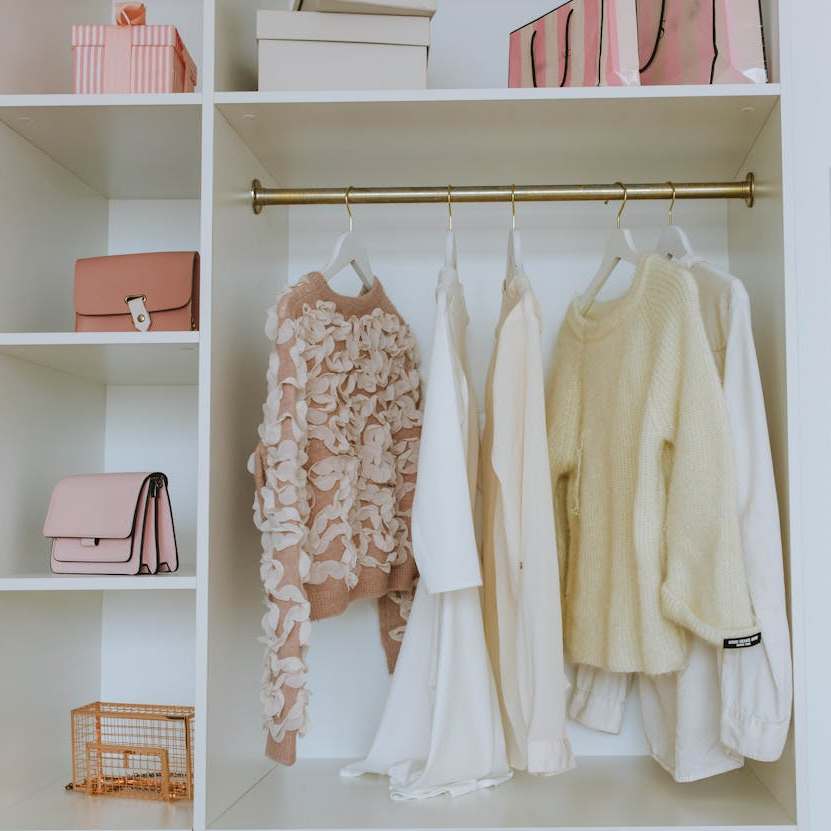
The goal isn’t to create a picture-perfect wardrobe that looks like something out of a home interiors magazine. It’s to make the space work for the person using it. That means being able to see what you own, find what you need and put outfits together without turning the bedroom upside down.
How we organise a wardrobe depends on the individual and the space available. You can sort it by type, colour, occasion, or even by season. There is no single correct method; the best system is the one that makes sense to you and is easy to maintain.
Personally, I’m a big fan of thinking about how we get dressed in the first place. This Guardian article exploring four different approaches to getting dressed is an interesting reminder that we all have different habits and preferences (yes, of course I am the speed styler… but mostly because my wardrobe is full of the same things haha).
In short, if you tend to wear the same combinations repeatedly, you can group those pieces together. If you prefer to separate your work clothes from you leisure clothes, you can divide them accordingly. Whatever works for you!
Some tips that can make a real difference:
- Keep daily clothes easy to reach and stack them so that you can see what you have right away.
- If you are tight on space, store less frequently used items like seasonal or occasional items, in less used spaces.
- Make sure you have a designated place things like accessories and shoes, so you know where to store them when not in use.
The result? A wardrobe that works with you rather than against you. You might even rediscover clothes you’d forgotten about and find new combinations without buying anything new.
Step 3: Deal with the rest
Time to revisit the maybe pile.
Sometimes an item ends up there because we’re genuinely unsure whether to keep it. Other times, we know exactly what the problem is but haven’t quite decided what to do about it or how to mend it.
The answer is a question: is that item worth the effort?
Can you mend it pretty easily? Can you remove the stain? Is it just too big or too small? Was it a present? If you can fix it, great, if not, you don’t need to feel guilt for letting go of things that do not work for you anymore. If you really cannot make up your mind, take a look at the charity bag hack.
Now that the maybe pile is resolved, let’s deal with the give away pile. There are several options, depending on the condition and type of clothing:
- Sell: Really good-quality, desirable items may find a new owner through resale platforms or local selling groups.
- Donate: Clean, wearable clothes can be offered to charities or other organisations that accept them.
- Gift: Clothing can be gifted to friends and family, and it’s a lovely way to pass things on to someone you love.
- Recycle: Textiles that cannot reasonably be reused can be recycled! By material or type: cashmere, cotton, underwear, socks, sport shoes, and everything else.
One important point: listing an item for sale doesn’t guarantee it will find a buyer. It’s worth checking being realistic about condition and desirability of what you’re passing on. Rehoming items responsibly means considering whether someone else is likely to want and use them.
Ultimately, the goal is to give unwanted clothes the best possible chance of being used again, rather than simply moving the problem somewhere else.
Conclusion: A wardrobe that works for you
Decluttering your wardrobe doesn’t have to mean getting rid of everything you own and embracing minimalism. Nor do you have to follow someone else’s rules about how to sort out your wardrobe.
It’s about understanding what you have, making thoughtful decisions and creating a system that works for your life. Sometimes you let go of things, and sometimes you repair others.
And perhaps the most sustainable wardrobe is not necessarily the smallest one, but the one where you make the most of what you already own.